
How to Do Bulgarian Split Squats Correctly for Stronger Legs
Most people skip the bulgarian split squat. The ones who do not often wish they had, at least until they learn to do it right. Well, it looks simple: the movement of one foot elevated, one foot forward, lower and repeat. But get the setup wrong and it punishes your knees and misses the muscles entirely. Let’s decode how to do it properly.
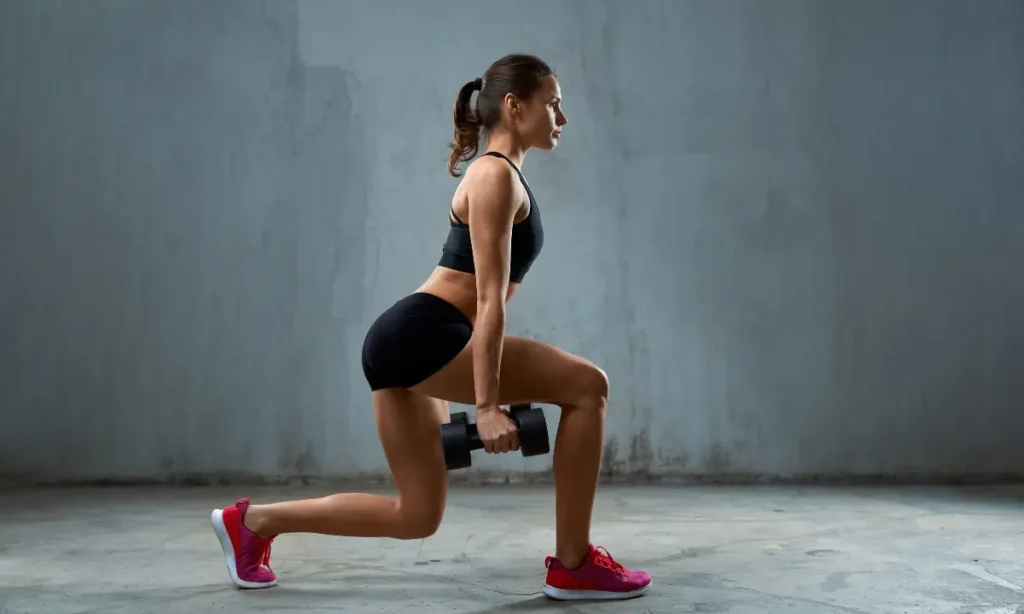
Split Squats vs Bulgarian Split Squats
These two movements look similar but they are not the same exercise.In a standard split squat, both feet stay on the floor. The load is shared, range of motion is limited, and difficulty stays manageable. A useful starting point, but it has a ceiling.
The bulgarian split squat elevates the rear foot on a bench. That single change increases the range of motion, shifts almost all the load onto the front leg, and forces your hip flexors, glutes, and quads through a deeper range. It also exposes any strength imbalance between legs immediately, which is exactly why it is more uncomfortable and more effective.
If you can already do split squats and are not progressing the bulgarian version, you are leaving real development on the table.
How to Do it Correctly?
Set Up Before You Rep
Stand roughly two feet in front of a bench. Place the top of your rear foot flat on the bench. Your front foot should be far enough forward that when you lower down, your shin stays close to vertical. Too close and your knee caves forward. Too far and you lose drive from the front leg.
Brace your core, pull your shoulders back, and fix your gaze ahead. Balance becomes easier with a fixed focal point.
The Movement Itself
Lower your hips straight down, not forward. Think about the rear knee travelling toward the floor rather than pushing your hips toward the front foot. At the bottom, your front thigh should be roughly parallel to the floor or just below.
Drive back up through your front heel. That cue alone shifts the load from your knee onto the glutes and quad where it belongs. In every bulgarian split squat rep, control the descent, do not drop into the bottom position and bounce out.
Mistakes that Follow Most People
The most common error is placing the front foot too close to the bench, forcing the knee past the toes and loading the joint instead of the muscle.
The second is rushing. A slow, controlled descent builds far more strength than a fast, sloppy rep.
Variations to Try
Once your bodyweight form is solid, adding load changes the stimulus.
Dumbbells at your sides keep the movement straightforward. This version works well for quad exercises, torso upright, front knee tracking over the foot.
Lean your torso slightly forward and the emphasis shifts toward the glutes. This makes it one of the more effective glute exercises with free weights, producing a deep hip stretch that most glute workout routines never reach.
A barbell across the upper back increases total load and demands more core stability. Start lighter than you think you need to.
If you train at one of the gyms in silicon oasis with quality benches and enough floor space, you have everything needed for all three variations in one session. Nitro Gym is set up for exactly this kind of lower body work.
FAQs
They serve different purposes. The bulgarian split squat is better for addressing imbalances and unilateral strength. Regular squats allow heavier bilateral loading.
Yes, with bodyweight only. Get comfortable with the balance and range before adding any load.
Three to four sets per leg. The movement is demanding and volume adds up quickly on a single leg.
Summing Up
The bulgarian split squat is one of the most effective lower body movements and most people are not doing it. Get the setup right, control every rep, and progress load gradually.
For the space and equipment to train it properly, the gyms in Silicon Oasis worth starting at is Nitro Gym. Get the form right and results follow.