


Mastering the Basics: Essential Exercises for a Well-Rounded Gym Routine
New to the gym and unsure where to start, or training regularly without the results you expected? The answer is usually the same: go back to basics. A structured routine built on fundamental...

New to the gym and unsure where to start, or training regularly without the results you expected? The answer is usually the same: go back to basics. A structured routine built on fundamental compound and isolation movements is the foundation of every effective fitness programme. At Nitro Gym, our certified trainers at the gym in Al Barsha and the gym in DSO teach members to master the basics, use proper form, and progress over time. Here are the essential exercises for every routine.
The Foundation: Compound Movements
Compound exercises engage multiple muscle groups simultaneously, producing greater hormonal response, higher calorie burn, and more functional strength than isolation movements alone. These are the non-negotiables in any effective gym routine.
Squats
The squat is the single most effective lower body exercise available. It targets the quadriceps, hamstrings, glutes, and core simultaneously while developing functional strength that transfers directly to everyday movement. Stand with feet shoulder-width apart, sit your hips back and down as if lowering into a chair, keep your chest tall and knees tracking over your toes, then drive through your heels to return to standing.
Key technique point: Your weight should stay evenly distributed across your feet, not shifting forward onto your toes.
Deadlifts
The deadlift trains the entire posterior chain hamstrings, glutes, lower and upper back, and core in a single movement. Stand with feet hip-width apart, hinge at the hips and bend your knees to grip the bar. Keep your back flat and chest up, then drive through the floor to stand tall. Lower the weight with control.
Key technique point: Think of it as pushing the floor away rather than pulling the weight up this cue improves back position significantly.
Bench Press
The bench press is the primary horizontal pushing movement for developing chest, anterior deltoid, and tricep strength. Lie on a flat bench, grip the barbell slightly wider than shoulder-width, lower it with control to mid-chest, and press it back up in a slight arc. Keep your feet flat on the floor and maintain a natural arch in your lower back.
Overhead Press
The overhead press develops shoulder strength, upper back stability, and core engagement simultaneously. Standing or seated, press a barbell or dumbbells directly overhead until your arms are fully extended, then lower with control. This movement builds the shoulder stability that supports almost every upper body exercise.
Rows
Horizontal pulling movements barbell rows, dumbbell rows, or cable rows are essential for balanced upper body development and posture. For every pressing movement in your gym routine, there should be a corresponding pulling movement. Rows develop the rhomboids, lats, rear deltoids, and biceps, and directly counteract the postural effects of desk-based work.
Pull-Ups and Chin-Ups
Bodyweight vertical pulling is one of the most effective back and bicep exercises available. Pull-ups (palms facing away) emphasise the lats; chin-ups (palms facing you) increase bicep involvement. Both develop grip strength and upper body pulling power that carries over to almost every compound lift.
Lunges
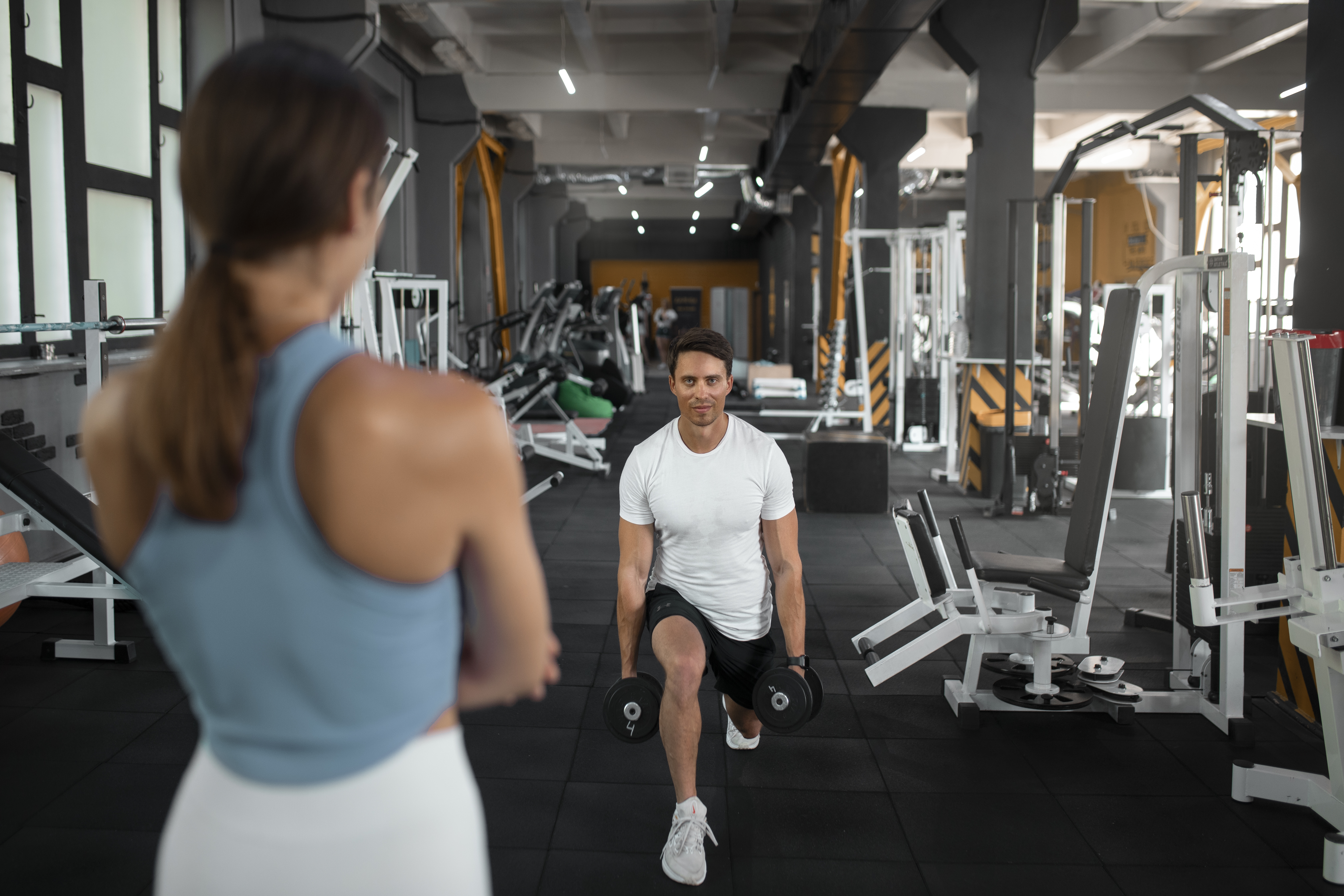
Lunges develop unilateral leg strength, improve balance, and correct muscular imbalances between legs something bilateral exercises like squats can mask. Step forward or backward, lower your hips until both knees reach approximately 90 degrees, then drive back to the starting position.
Supporting Your Compound Work: Essential Additions
A complete gym routine includes more than just heavy compound lifts. Here's what rounds it out:
- Planks — Develop deep core stability and anti-extension strength that supports every other exercise in your programme.
- Cardiovascular training — Running, cycling, or rowing improves cardiovascular efficiency, supports fat loss, and accelerates recovery between strength sessions.
- Dips — An effective bodyweight movement for chest and tricep development, particularly useful when bench press equipment is occupied.
- Stability exercises — Balance and stability work improves proprioception and joint stability, reducing injury risk during heavier compound lifts.
- Stretching and mobility work — Maintaining joint range of motion ensures you can perform every exercise through its full movement arc, maximising muscle recruitment and reducing injury risk.
Frequently Asked Questions
How many exercises should a beginner include in their gym routine?
How often should I repeat the same gym routine?
When should I increase the weight in my gym routine?
Build Your Foundation, Build Your Results
The exercises in this guide aren't complicated but they're the same movements that form the basis of every effective strength programme at every level. Master the squat, deadlift, press, and pull, perform them consistently with proper form, and progress them over time.
At Nitro Gym, whether you train at our gym in Al Barsha or our gym in DSO, our certified trainers are here to help you learn these movements correctly from day one because a strong foundation is what everything else is built on.